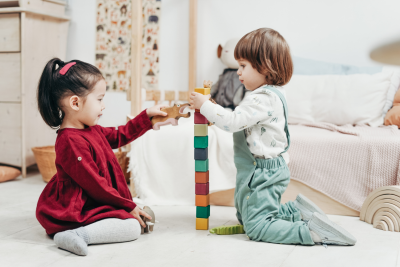
Gross motor development in children
Daniel Smit | APA Titled Paediatric Physiotherapist
How children build movement skills through play, practice and everyday experiences
Gross motor skills are the big body movements children use to explore, play and take part in daily life. They involve the trunk, arms and legs and include skills such as rolling, sitting, crawling or moving in other ways, walking, running, climbing, jumping and balancing.
Children develop movement skills in a broad sequence, but the timing and the way a skill looks can vary. Some children skip particular ways of moving, use mobility aids, or develop skills in a different order. A milestone list is a guide for noticing development, not a test or diagnosis. If you are concerned, you know your child best and it is appropriate to ask for advice.
How gross motor skills develop
The following are broad examples of skills that may emerge over time. They are not strict age deadlines, and each skill depends on a child’s opportunities, health, preferences and individual development.
Babies: building control and exploring movement
Babies gradually develop head and trunk control, reach and turn, roll, sit, and find ways to move across the floor. Some crawl on hands and knees; others shuffle, roll, commando crawl or move in another way. Later in the first year, many begin pulling to stand and cruising along furniture.
Toddlers: getting around and trying new challenges
As children become more mobile, they practise walking, squatting to pick something up, getting back to standing, carrying objects while moving, climbing onto low furniture and navigating steps with support. Walking may be unsteady at first, and falls are common while the skill is new.
Preschoolers: combining skills
Children build confidence and coordination through running, changing direction, kicking and throwing a ball, climbing, jumping, balancing and using stairs. Some may begin hopping, pedalling or catching a large ball as these skills become familiar.
School-age children: refining movement and participation
Strength, balance, timing and coordination continue to develop as children learn more complex movement skills and join in games, physical education, recreation and sport. Interests and experience shape which skills they practise.
Play that supports movement
Children learn through active, enjoyable experiences rather than drills. Everyday play gives them chances to practise a movement, adapt it and try again. Follow your child’s interests and make the activity easier or harder as needed.
- For babies: offer supervised floor play while awake, including short, comfortable periods on the tummy; place a toy or familiar face nearby to encourage looking, reaching and turning. Australian guidance recommends building toward at least 30 minutes of tummy time spread across the day for babies who are not yet mobile.
- For toddlers: make space for cruising, walking between safe supports, carrying toys, stepping over low soft obstacles, climbing at a suitable playground and playing with push-along toys.
- For preschoolers: try dancing, animal walks, bubbles, ball games, playground play, nature walks, stepping stones, jumping over chalk lines or riding a tricycle when ready.
- For all children: include accessible options, adapt equipment and surfaces, and allow rest. The goal is enjoyable participation, not performing a movement in one prescribed way.
When to seek advice
Talk with your GP, child and family health nurse, paediatrician or paediatric physiotherapist if your child is not gaining movement skills over time, has difficulty joining everyday play, seems to use one side much less than the other, appears unusually stiff or floppy, or you have any other concern. Seek advice promptly if your child loses a skill they had previously gained. You do not need to wait for a particular age or for a concern to become severe before asking.
A physiotherapy assessment looks at your child’s movement in context: what they enjoy, what is hard, how they move, and what would help them take part. Support may include practical play ideas, adapting an activity or environment, and working with your family and other professionals around goals that matter to you.
A note about development
This page offers general information and cannot assess an individual child. Children born prematurely may be followed using corrected age in early development; discuss what is appropriate for your child with their health professional. The Australian 24-hour movement guidelines recommend plenty of floor play for babies under one year, and at least three hours of physical activity spread through the day for children aged one to five years, with energetic play included.
Download the gross motor development in children handout (PDF)
Further information
Raising Children Network: raisingchildren.net.au (baby milestones; physical activity 0-5 years).
Healthdirect Australia: healthdirect.gov.au/developmental-milestones.
Australian Government Department of Health: health.gov.au (24-hour movement guidelines, birth to 5 years).
Little Strides Physiotherapy | Helping children move, grow and thrive.
Related resources and physiotherapy support
Explore Little Strides physiotherapy in Narre Warren. Selected appointments are available in Nunawading. View appointment and booking information or ask us about your needs.